

/en/
[row class="c-rcktcms__center"]
[col size="12"]
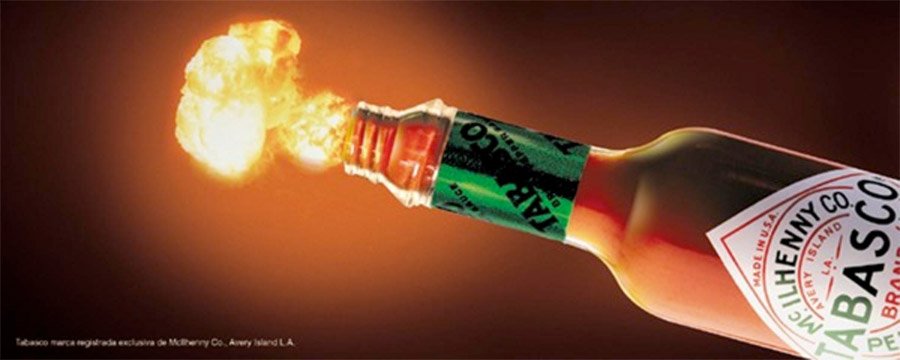
Tabasco sauce is an American hot sauce created in 1868 by Edmund McIlhenny on Avery Island, Louisiana. Its original version, red Tabasco, contains only peppers, distilled vinegar, and salt, and its pepper mash ages for up to three years in oak barrels. Still made by the McIlhenny family, it is sold in more than 195 countries and territories.
Key takeaways
- Brand: Tabasco, made by the McIlhenny Company, a family business based on Avery Island, Louisiana, since 1868.
- Original recipe: tabasco peppers, distilled vinegar, and salt; the pepper mash ages for up to three years in white oak barrels previously used for bourbon.
- Heat on the Scoville scale: 2,500 to 5,000 SHU for red Tabasco, about the same as a mild jalapeño.
- Range: about a dozen sauces, from Sweet & Spicy (100 to 600 SHU) to Scorpion (23,000 to 33,000 SHU).
- Sizes: 60 and 150 ml bottles, 3.7 ml mini bottles, and a 3.78-liter gallon for food service.
- Production: more than 700,000 bottles a day at full capacity, with labels in 36 languages and dialects.
For a long time, Tabasco made just one sauce: the red one. Since the 1990s, the brand has launched many more, from green jalapeño to Scorpion. Their heat levels vary widely: Tabasco on the Scoville scale ranges from 100 SHU for the mildest to 33,000 SHU for the hottest. Here's each sauce and its heat level, the ingredients in original Tabasco, how it's made, and the brand's history.
What is Tabasco sauce?
Tabasco sauce is a thin, vinegar-based hot sauce dispensed a drop at a time. It's made by the McIlhenny Company, a family business based on Avery Island, Louisiana, and still run by the founder's descendants. Tabasco is a registered trademark, although the word has almost become a generic term: people often say “tabasco” when they mean hot sauce in general.
The sauce takes its name from the tabasco pepper, a variety of Capsicum frutescens native to Mexico, itself named after the Mexican state of Tabasco. The fresh pepper is much hotter than the sauce: the vinegar dilutes its heat.
Red Tabasco is a classic example of a “Louisiana-style” hot sauce: thin and vinegary, it adds heat to a dish without overwhelming it. If you like that style, try Crystal, Louisiana, or Frank's RedHot, all of which also originated in Louisiana.
The Tabasco range: every sauce and its flavor
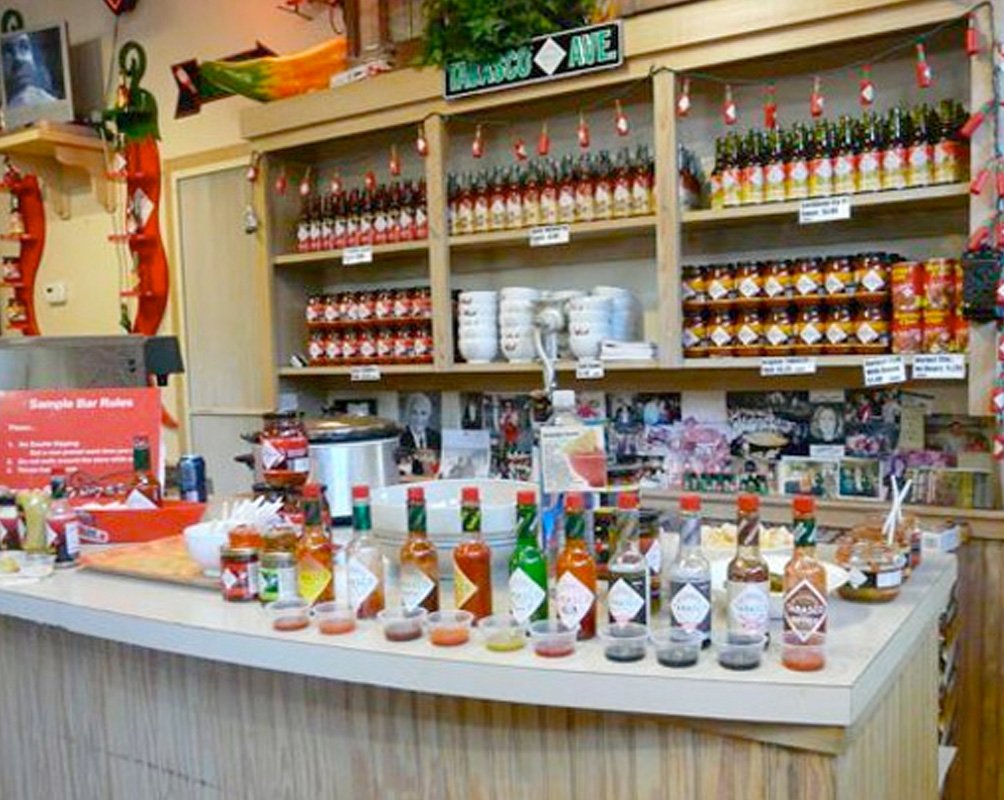
The Tabasco range now includes about a dozen sauces. Red Tabasco stays true to the 1868 recipe. Most of the others add different peppers, fruit, or spices, and often contain a little red Tabasco or its aged pepper mash. Here are the main ones, from mildest to hottest.
| Sauce | Peppers and key ingredients | Flavor | Try it with |
|---|---|---|---|
| Sweet & Spicy | Red pepper, sugar, pear, ginger | Sweet, barely spicy | Fried foods, grilled foods, noodles |
| Green Tabasco (Green Jalapeño) | Jalapeño | Fresh, vegetal, tangy | Guacamole, fish, eggs |
| Tabasco Garlic (Garlic) | Tabasco peppers and milder peppers, garlic | Garlicky, mellow | Pasta, pizza, marinades |
| Roasted Pepper | Roasted tabasco peppers, balsamic vinegar, basil | Mellow, smoky, syrupy | Sandwiches, omelets, grilled foods |
| Tabasco chipotle | Chipotle (smoked jalapeño) | Smoky, woody | Barbecue, chili con carne, burgers |
| Sriracha | Red pepper, garlic, sugar | Thick, garlicky, slightly sweet | Stir-fried noodles, rice, burgers |
| Red Tabasco (Original Red) | Tabasco pepper | Bright, vinegary | Bloody Mary, oysters, pizza |
| Family Reserve | Selected tabasco peppers, white wine vinegar | Mellow, slightly woody | Oysters, seafood, Bloody Mary |
| Tabasco Habanero | Habanero, mango, papaya, banana, tamarind | Fruity, very hot | Chicken wings, jerk chicken, marinades |
| Scorpion | Trinidad Moruga Scorpion, guava, pineapple | Fruity, fiery | A few drops in chili or a sauce |
Green or red Tabasco: what's the difference?
Red Tabasco is made with tabasco peppers, whose mash ages for up to three years; the green sauce is made with jalapeños and is about four times milder than the red sauce. Despite its name, green Tabasco therefore contains no tabasco peppers and does not spend three years in a barrel.
| Criterion | Red Tabasco | Green Tabasco |
|---|---|---|
| Pepper | Tabasco pepper | Jalapeño |
| Heat | 2,500 to 5,000 SHU | 600 to 1,200 SHU |
| Aging | Up to three years in oak barrels | No three-year aging period |
| Flavor | Bright, vinegary, with a straightforward kick | Fresh, vegetal, milder |
| Great with | Bloody Mary, oysters, pizza, eggs | Guacamole, fish, salads, eggs |
Choose the red sauce to give a dish a definite kick, or the green to add flavor without too much heat. The green is also a good place to start if you're wary of spicy food.
What bottle sizes are available?
The Tabasco bottle retains the shape of the cologne bottles Edmund McIlhenny used in 1868. Its flow restrictor lets out just a few drops at a time. In France, the most common sizes are:
- the 60 ml bottle, the classic table size;
- the 150 ml bottle, the larger size for home use;
- the gallon of red Tabasco, or 3.78 liters, for restaurants and bars, also available for other sauces in the range;
- the 3.7 ml mini bottle, served in hotels, with prepackaged meals, or in U.S. military rations.
Tabasco on the Scoville scale: how hot each sauce is
At 2,500 to 5,000 Scoville heat units (SHU), red Tabasco is a moderately hot sauce: it's about as hot as a mild jalapeño. Depending on the recipe, though, the range runs from very mild to very hot, as this table based on figures published by the brand shows.
| Tabasco sauce | Heat (SHU) | Benchmark |
|---|---|---|
| Sweet & Spicy | 100 to 600 | About 10 times milder than the red sauce |
| Green (jalapeño) | 600 to 1,200 | About 4 times milder than the red sauce |
| Garlic (Garlic) | 1,200 to 2,400 | About twice as mild as the red sauce |
| Roasted Pepper | About 1,200 to 2,500 | About twice as mild as the red sauce |
| Chipotle | 1,500 to 2,500 | About twice as mild as the red sauce |
| Sriracha | 1,000 to 3,000 | About twice as mild as the red sauce |
| Red (Original Red) | 2,500 to 5,000 | Reference |
| Family Reserve | 2,500 to 5,000 | Comparable to the red sauce |
| Habanero | More than 7,000 | About twice as hot as the red sauce |
| Scorpion | 23,000 to 33,000 | Up to 10 times hotter than the red sauce |
These values vary from harvest to harvest. A fresh tabasco pepper measures 30,000 to 50,000 SHU; in the sauce, vinegar dilutes its heat roughly tenfold. To understand these units, see our page on the Scoville scale.
Which Tabasco sauce is the hottest?
The hottest Tabasco sauce is Scorpion, launched in 2017: at 23,000 to 33,000 Scoville heat units, it can be up to ten times as hot as the red sauce. It gets its heat from the Trinidad Moruga Scorpion, one of the world's hottest peppers, tempered by guava and pineapple. At launch, the brand described it as twenty times hotter than the red sauce, which explains the 50,000 SHU figures still seen today.
Next comes Habanero, at more than 7,000 SHU. This Jamaican-style sauce pairs habanero peppers with mango, papaya, and tamarind. Both are still far from extreme hot sauces: to go hotter, see our ranking of hot sauces by heat level.
Which Tabasco sauce is the mildest?
The mildest Tabasco sauce is Sweet & Spicy, at 100 to 600 SHU: a sweet pear-and-ginger sauce with barely any heat. Among the classic thin, vinegary sauces, green jalapeño (600 to 1,200 SHU) is the mildest.
Want more heat than Scorpion? Try our extreme hot sauces.
What's in Tabasco: ingredients and production
Red Tabasco contains just three ingredients: distilled vinegar, red peppers—specifically tabasco peppers—and salt. It has no sugar, gluten, or additives and contains almost no calories; a teaspoon has about 35 mg of sodium. The other sauces in the range have longer ingredient lists, with different peppers, fruit, sugar, or spices.
How is Tabasco made?
The way red Tabasco is made has changed little since 1868: only the aging period has grown longer.
- The seeds are selected and produced on Avery Island, then supplied to growers in Central America, South America, and Africa.
- The peppers are picked by hand when their color matches a “little red stick” used as a reference.
- That same day, the peppers are ground on-site with a little Avery Island salt. The resulting pepper mash is then sent to Louisiana.
- The pepper mash ages for up to three years in white oak barrels previously used for bourbon. A layer of salt seals each barrel: fermentation gases can escape, but nothing gets in.
- It is then mixed with distilled vinegar for 28 days and stirred regularly.
- The skins and seeds are filtered out, then the sauce is bottled on the island.
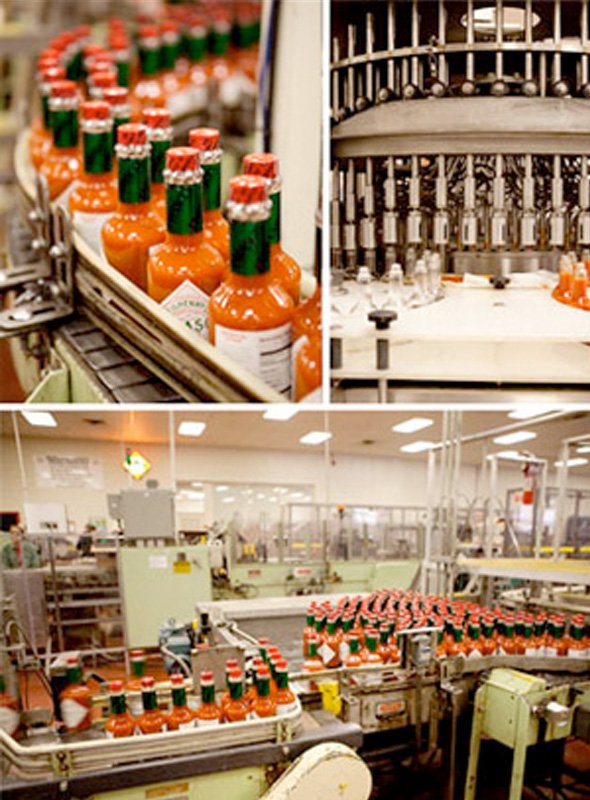
The barrel-aging warehouse on Avery Island holds about 73,000 barrels. Each is used 15 to 20 times, over 35 to 40 years; before 1900, the pepper mash aged in stoneware jars. When all four production lines are running, the factory produces more than 700,000 60 ml bottles a day. Family Reserve takes aging further: its pepper mash ages for up to eight years before being mixed with white wine vinegar.
The history of the Tabasco brand: the McIlhenny family since 1868
Edmund McIlhenny (1815-1890) was born in Hagerstown, Maryland, and moved to Louisiana around 1840 to work at the Bank of Louisiana. In 1859, he married Mary Eliza Avery, whose family owned a plantation on Petite Anse Island, now Avery Island. After the Civil War ruined his business, he retreated there and grew Capsicum frutescens peppers from Mexico or Central America.
In 1868, he harvested his first peppers for sale: the company considers this its founding date, although the recipe's exact origins remain debated. The following year, he shipped 658 bottles at a dollar apiece to grocers along the Gulf of Mexico, mainly in New Orleans. He named his sauce “Tabasco,” a word of Indigenous Mexican origin, and received a patent in 1870. By late 1873, his bottles were crossing the Atlantic to France and England.
His first bottles, ordered from a New Orleans glassmaker, were shaped like cologne bottles; he corked them and sealed them with green wax. After his death, his sons and then their descendants grew the business. Until the mid-1990s, it sold only the red sauce. The range then expanded to include green jalapeño, garlic, and habanero, followed by chipotle, Sweet & Spicy, Sriracha, and, in 2017, Scorpion, among others.
The company is still owned by the McIlhenny family and makes its sauce on the same island for more than 195 countries and territories. Tabasco has accompanied U.S. soldiers in their rations and even traveled to space aboard Skylab and the International Space Station.
Avery Island, birthplace of Tabasco sauce
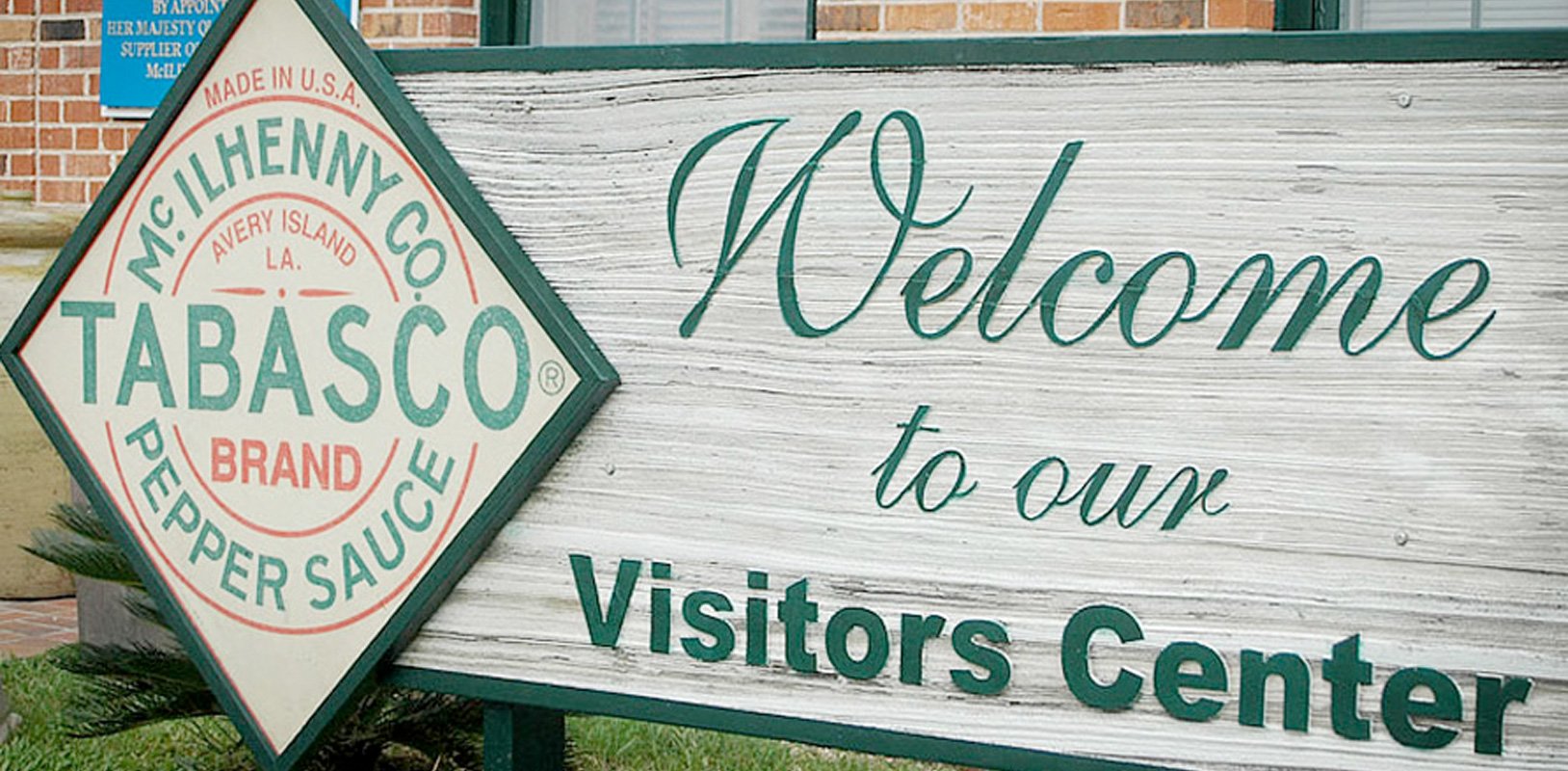
Despite its name, Avery Island isn't an island: it's a salt dome of about 900 hectares, surrounded by marshes in southern Louisiana. Its salt is used to make the pepper mash and seal the barrels. The site is home to the factory, the barrel-aging warehouse, a museum, and Jungle Gardens, gardens created by Edward Avery McIlhenny, the founder's second son, where a colony of egrets nests each spring. Visitors can see the bottling line.
How do you use Tabasco sauce?
Tabasco is measured by the drop: a 60 ml bottle contains at least 720. Add it near the end of cooking or at the table, since heat diminishes its aroma but not its spiciness.
- The red sauce is a classic in a Bloody Mary and with oysters; it also adds a kick to eggs, pizza, soups, and salad dressings.
- In Louisiana, it goes with gumbo, jambalaya, and seafood.
- The green sauce adds flavor to guacamole, fish, and salads; chipotle goes with grilled foods and chili; Habanero with chicken wings and marinades.
- Sweet & Spicy and Sriracha go well with fried foods, noodles, and Asian dishes.
Frequently asked questions about Tabasco sauce
Is Tabasco a French brand?
No. Tabasco is an American brand made by the McIlhenny Company on Avery Island, Louisiana, since 1868. France is nevertheless one of its oldest markets: the first bottles arrived there in late 1873. The island's original name, Petite Anse, also recalls Louisiana's French past.
What is black Tabasco?
There is no black Tabasco sauce: the term refers to a bottle with a dark label. In the current range, those are the two hottest sauces, Habanero (over 7,000 SHU) and Scorpion (23,000 to 33,000 SHU).
What is Tabasco Extra Hot?
It's Tabasco Habanero: in Europe, some of its labels say “Extra Hot.” At more than 7,000 SHU, it's about twice as hot as the red sauce, but nowhere near Scorpion.
Is there a Carolina Reaper Tabasco?
No. Tabasco's hottest sauce is Scorpion, made with Trinidad Moruga Scorpion peppers. To try the Carolina Reaper, long considered the world's hottest pepper, you'll need to look to other brands.
Does Tabasco need to be refrigerated?
No: the vinegar and salt protect it. Unopened, a bottle of red Tabasco keeps for up to five years away from heat and light; the brand considers it best within three years. Over time, the sauce darkens and may turn brown, but it's still safe: refrigeration simply slows the color change. Other sauces in the range don't keep as long, so follow the date on the bottle.
Updated November 2026.
[carrousel products="1522,1121,25,385,1058,765" title="Tabasco" subtitle="the sauces"]
[/col]
[/row]
Tabasco on the Scoville scale: how hot each sauce is