


barbecue
More than just sauces, barbecue sauce is a way of life. It's an integral part of American cuisine. We only offer premium barbecue sauces, made with fresh ingredients known for their quality. Each sauce is unique and has its own use. You have the classic barbecue sauce used to accompany meats, they will be smoky, spicy, sometimes sweet. You have barbecue sauces intended for marinades. They will be more liquid in consistency, more acidic and spicier to properly infuse the meat. And finally you have basting sauces, or brushing sauces which consist of brushing the sauce directly on the meat but at the end of cooking, to caramelize the sauce on the meat, they are sweet and spicy and will let you discover the essence of American barbecue.
54 products
Active filters:


Promo
-30%
-30%

Artisanal Barbecue Sauces - Smoky and Gourmet Flavors | Sauce-Piquante.fr
Rufus Teague Maple Whiskey BBQ Sauce
€9.00
In stock


Artisanal Barbecue Sauces - Smoky and Gourmet Flavors | Sauce-Piquante.fr
Hellicious BBQ Peanut Sauce - Indulgent flavor for grilling
€7.50
In stock


Promo
-50%
-50%

barbecue
BBQ Sauce Bloody Whisky Hellicious - French artisanal sauce with whisky and smoked spices
€8.99
In stock

Artisanal Barbecue Sauces - Smoky and Gourmet Flavors | Sauce-Piquante.fr
Hellicious BBQ Curry & Pineapple Sauce - Naturally addictive
€9.90
In stock


Artisanal Barbecue Sauces - Smoky and Gourmet Flavors | Sauce-Piquante.fr
smoky lillie's q barbecue sauce
€7.18
In stock


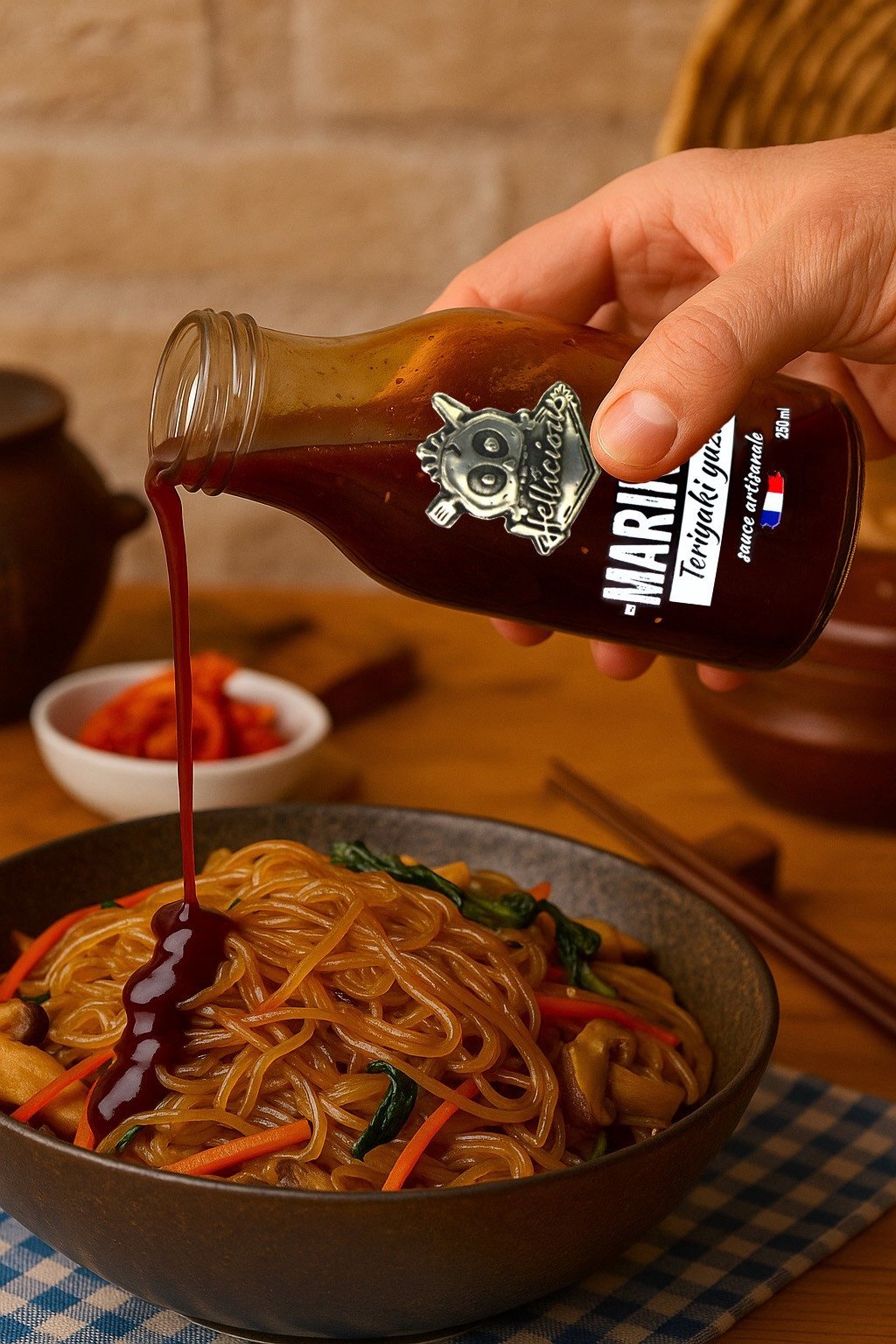
New sauce
To fill up on Asian flavors
Discover
Artisanal Barbecue Sauces - Smoky and Gourmet Flavors | Sauce-Piquante.fr
Lillie's Q carolina bbq sauce
€7.18
In stock


Artisanal Barbecue Sauces - Smoky and Gourmet Flavors | Sauce-Piquante.fr
Sweet and spicy roadhouse barbecue sauce
€8.00
Out of stock


Artisanal Barbecue Sauces - Smoky and Gourmet Flavors | Sauce-Piquante.fr
Sticky sweet BBQ sauce Stubb's
€12.66
Out of stock


best seller


Promo
-€5.20 New
-€5.20 New
Condiments
Pack of 5 essential products to make a quality burger
€33.28
€38.48
In stock

Promo
-€5.20 New
-€5.20 New
Promo
-€5.20 New
-€5.20 New
Artisanal Barbecue Sauces - Smoky and Gourmet Flavors | Sauce-Piquante.fr
BBQ Pack - Rub & Barbecue Sauces
€35.29
€40.49
In stock

Promo
-€5.20 New
-€5.20 New
Promo
-€9.90 New
-€9.90 New
Spicy Gifts
Hellicious 8-Pack of French BBQ Sauces and Condiments
€59.86
€69.76
In stock

Promo
-€9.90 New
-€9.90 New
What is barbecue sauce?
Barbecue sauce also written as bbq sauce (more common across the Atlantic), is a liquid that varies in thickness depending on its recipe. It's a sauce full of sour flavors (often vinegar or apple cider are used), sweet, spicy (varying in strength depending on the sauces and regions) and sometimes smoky. Barbecue sauce can be used in several ways; either as an accompaniment to meat, it can also be used for cooking as a marinade by brushing the grill just before, during and after cooking, or even for your noodles and sautéed vegetables.
The basic ingredients are always the same, tomato sauce or tomato puree, vinegar or cider, spices and peppers (more or less strong depending on the desired result) and a sweet element, which can be honey, or sugar-concentrated syrups.
What is the origin of barbecue sauces?
Christopher Columbus himself is said to have brought back sauces in his luggage from one of his trips to the Caribbean. Others specify that barbecue sauces appeared during the creation of the first American colonies in the 17th century. However, cookbooks didn't start talking about barbecue sauces until the following 200 years. Specialists (yes, there are some) cite the first barbecue sauce as being South Carolina mustard sauce, which would have come from 18th-century German settlers. However, it wasn't until 1923 that the first barbecue sauces were commercialized by a certain Louis Maull whose company Maull co. still exists and produces sauces and condiments in the USA. Nevertheless, it would take until 1951 to see the barbecue sauce trade develop with Heinz company, which was the first national distributor to market barbecue sauce.
In France, even today we find few barbecue sauces except those from major sauce market leaders, which actually constitutes a very limited offer. That's why we offer here a large selection of barbecue sauces, so you can find your favorite sauce!
What's in a BBQ sauce?
It all depends on the sauce recipe because as you can see we have a very wide choice of barbecue sauces. Some will contain mustard, others will focus more on the smoky side, some bottles will have a good tropical taste, some will be spiced up with chipotle pepper (smoked chili), or with spices, honey, paprika, garlic...
Our selection mainly includes artisanal barbecue sauces containing quality natural ingredients.
Below you will find our products, each more flavorful than the last:
- smoky sauce with Jack Daniel's whiskey
- Stubb's honey sauce
- sweet and smoky Hellicious French artisanal sauce
- Lynchburg with Jack Daniel's whiskey
- Rufus Teague liquid smoke
- honey and mustard Hellicious sauce
- Stonewall Kitchen maple syrup and chipotle BBQ sauce
- 3 peppers spicy Rufus Teague sauce (like a spicy smoked ketchup!)
- honey and mustard Lillie's
- spicy Lynchburg sauce with Jack Daniel's whiskey
- Diablo Limonajo Rufus Teague with garlic flavor
What is the best barbecue sauce?
If the savory taste of smoked sauce makes you vibrate and you want to use it for preparing your recipes, Lillie's smoky sauce will be ideal.
If you need the character of whiskey while having a thick sauce then the Rufus Teague sauce with Worcestershire sauce will be perfect. The more syrupy version with Jack Daniel's whiskey would be the Lynchburg sauce.
Are you looking for more simplicity with a gourmet touch? In this case, the sweet and smoky Hellicious sauce will suit you.
For those who want to combine taste pleasure with a good tropical flavor, the spicy mango Hellicious version will enhance your dishes.
What to eat with barbecue sauce?
BBQ sauce will easily find its place in your kitchen, whether you use it by the spoonful directly on your plate or measure it by the gram for preparing your pulled pork.
You can use your sauce as a condiment as it easily replaces ketchup. It will allow you to change your culinary routine with ease.
Chefs also use BBQ sauce
Indeed in the United States there are many barbecue cooking competitions. The sauce brands preferred by chefs are Lillie's, highly appreciated for the quality of its recipes, Rufus Teague for its gourmet aspect, and Stubb's for its aroma and thick texture.
Yes, barbecue isn't just a popular dish, but a true way of life. There are countless different recipes and cooking methods, with each family having their own traditions.
Barbecue brings family and friends together
Who hasn't gathered around the grill? Whether you're many or just two, barbecue brings people together, it allows for a pleasant moment and suits both meat lovers and vegetarians.
Around the fire pit there are several types of people; there's the one who gives professional barbecue advice, the one who sips their drink, the cook who delights your taste buds, the one who salivates while smelling the good aroma coming from the stove. No matter which person you are, the essential thing is that you're having a convivial moment!
Barbecue sauce buying guide
An infinity of possibilities awaits you thanks to BBQ sauces!
Almost every country has its own barbecue sauce recipes, here are some examples:
Argentinian barbecue sauce: In Argentina, Chile, Bolivia and Peru, barbecue sauce is called Chimi Churry. It's a green sauce made with parsley served as a condiment at the table, however it's also used as a marinade or as a grill sauce (to brush on meat). There are said to be 40 million Chimi Churry recipes in Argentina and throughout South America, it's used with beef, lamb, chicken, turkey, pork but also for vegetables.
Brazilian barbecue sauce: A small variant exists in Brazil called "Vinagrete" made with vinegar, olive oil, tomatoes, parsley, and onions.
Australian barbecue sauce: In Australia, barbecue sauce can simply be a mixture of tomatoes and worcestershire sauce, however the Australian market is vast and now also includes fruit-based sauces or brown sauces. I have also met Australians who use soy-based Asian sauces to accompany their barbecue, particularly in marinades.
Barbecue sauce in the USA: Barbecue sauce in the USA is like wine in France, each region has its specialty.
East Carolina BBQ Sauce: Most US barbecue sauces find their roots in the recipe of 2 sauces made in North Carolina. The first, which is also the simplest, was popularized by African slaves (who were at the origin of barbecue development in the United States), it consists of vinegar, pepper and chilies, it's used as a marinade and the meat is basted with it throughout cooking, to impregnate the meat with sauces (the sauce penetrates the meat). The sauce can be slightly sweetened or not at all.
South Carolina Mustard BBQ Sauce: One of the oldest sauces made in the USA. This sauce is made with mustard, vinegar, sugar and spices. This sauce is very popular from Columbia to Charleston, which is an area where there is a majority of Americans of German origin.
BBQ sauce in Texas: One of our favorites (we consume it by the tablespoon!), this sauce is heavily sprinkled with spices like cumin, chilies (chili, or ancho pepper), lots of pepper, paprika, fresh onions, just a bit of tomato, a little sugar or none at all, and especially meat juice and smoky flavors as the meat marinates in this sauce. Texas barbecue sauce isn't very thick and more resembles a soup, it easily penetrates the meat while transmitting its flavor.
Asian barbecue sauce: Yes, barbecue is also a very popular dish among our Asian friends, they have of course developed barbecue sauces for their fine palate.
Chinese barbecue sauce: Also called Hoisin Sauce, hoisin means seafood although it contains no fish. It consists of water, sugar, soy, white vinegar, rice, salt, wheat, garlic and chili. In Chinese cuisine, Chinese Hoisin barbecue sauce is used for spring rolls, mu shu pork, popiah and barbecue pork, this sauce is particularly used in Cantonese cuisine.
In Vietnam, hoisin sauce is particularly appreciated with Pho, which is a beef noodle broth or soup. You simply pour the sauce into the broth.
In India, a yogurt-based barbecue sauce is used for tandoori chicken.
In Japan, it's a sweet soy sauce called Tare or Teriyaki sauce (more common here), for Japanese Teriyaki which is a barbecue (grill) of fish or meat with Japanese sauce.
How to store BBQ sauce?
Once opened, your sauce will keep for months (even years) in the refrigerator. We recommend storing them in the fridge once opened to preserve the color (as there are no artificial colorings) as well as the organoleptic quality.
Efficient delivery service and responsive customer support
By ordering directly on our site, you'll benefit from ultra-fast order processing, delivery within 48/72 hours in metropolitan France, and a service that answers all your questions.
Shipping costs are automatically calculated by Colissimo or Chronopost based on the weight of your package. You can therefore see the delivery costs as soon as you have an item in your cart. When your cart price exceeds €60, delivery is free.
Where? When? How?


