

/en/
[row class="c-rcktcms__center"]
[col size="12"]
How many peppers are there, and how do you know which is the hottest? From the perfectly mild bell pepper to the legendary Pepper X, this pepper ranking lists more than thirty varieties from the mildest to the most fiery. This pepper ranking on the Scoville scale gives you a clear reference point, from the mildly flavored sweet pepper to the world's hottest pepper, whether you are looking for the ideal variety to spice up a dish or simply want to locate your favorite pepper.
Key points at a glance:
- The hottest pepper ranked to date is the Pepper X, with 2,693,000 SHU.
- The bell pepper, at 0 SHU, opens the ranking as it contains no capsaicin.
- Heat is measured on the Scoville scale, the standard unit of any ranking.
- There are more than 2,500 pepper varieties belonging to the great Capsicum family.
The hottest pepper: an unexpected champion
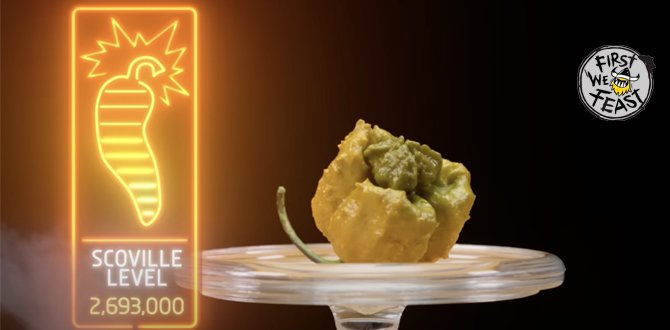
Discovery of Pepper X
Pepper X is a pepper developed by Ed Currie, who also created the famous Carolina Reaper. Announced as the world's hottest pepper, it is the result of several years of hybridization aimed at obtaining a variety extremely rich in capsaicin, the molecule responsible for the burning sensation.
Pepper X is distinguished by:
- A bumpy and rough texture, typical of ultra-hot peppers.
- A color ranging from green to yellow then brown depending on maturity.
- An extreme heat, greater than that of any previously commercialized pepper.
- A unique taste, with a more subtle flavor than that of the Carolina Reaper.
It was officially recognized by the Guinness World Records as the hottest pepper, turning the world of thrill-seekers upside down.
Comparison with other famous varieties
To measure the achievement of Pepper X, simply compare it to the most feared peppers in our ranking:
| Variety | Heat (SHU) |
|---|---|
| Pepper X | 2 693 000 |
| Carolina Reaper | 1,600,000 to 2,200,000 |
| Trinidad Moruga Scorpion | 1,200,000 to 2,000,000 |
| Ghost Pepper (Bhut Jolokia) | approximately 1,000,000 |
| Red habanero | approximately 350,000 |
Pepper X therefore sits well above its competitors: a true leap in intensity in the hot pepper ranking.
How to read this ranking: measuring heat in SHU
The Scoville scale, the unit of measurement for the ranking
Every pepper ranking is based on the same reference: the Scoville scale (SHU, for Scoville Heat Units). It quantifies the concentration of capsaicin, the molecule responsible for the sensation of heat. The higher the SHU number, the hotter and more burning the pepper.
A few reference points to place each variety:
- 0 SHU corresponds to the bell pepper, which contains no capsaicin.
- 2,500 to 8,000 SHU corresponds to the jalapeño, accessible to beginners.
- 100,000 to 350,000 SHU corresponds to the habanero, already very hot.
- Beyond 1,000,000 SHU, you enter the category of "super-hot" peppers.
To understand in detail the history and workings of this measure (dilution, liquid chromatography, test reliability), consult our complete guide on how the Scoville scale works.
The top of the extreme pepper ranking
In the highly competitive world of extreme peppers, here is a simplified ranking (heat levels can vary from one fruit to another):
| Rank | Pepper | Approximate SHU |
|---|---|---|
| 1 | Pepper X | 2,693,000 (Guinness record 2023) |
| 2 | Carolina Reaper | 1,600,000 to 2,200,000 (previous record) |
| 3 | Trinidad Moruga Scorpion | 1,200,000 to 2,000,000 |
| 4 | Naga / Bhut Jolokia | approximately 1,000,000 |
| 5 | Habanero | 100,000 to 350,000 |
Pepper X simply dominates.
The heat sensation: pain or pleasure?
The burning mechanism caused by peppers
The burning sensation comes from capsaicin, which binds to TRPV1 receptors. These receptors, normally responsible for detecting high temperatures, trick the brain:
- The body believes it is exposed to extreme heat.
- The reaction then turns into a burning pain.
- The brain releases endorphins and dopamine, producing a sometimes euphoric sensation.
It is this mix of pain and pleasure that drives many enthusiasts to seek out ever hotter peppers as they climb the rankings.
Testimonials on consuming hot peppers
Enthusiasts describe:
- A lightning-fast surge of heat from the very first bite.
- A heat that lasts several minutes.
- An intense burning sensation in the mouth, nose, and sometimes the face.
- Profuse sweating accompanied by a feeling of adrenaline.
- An almost addictive pleasure, for the most experienced.
For the less accustomed, the reaction can be far more difficult: tears, hiccups, difficulty breathing, and even temporary abdominal pain. The pepper also has real effects on the body, as detailed in our article on the health benefits of chili peppers.
Culinary uses of hot peppers
Recipes using Pepper X and Carolina Reaper to try at home
Although very powerful, these peppers are used in micro-quantities to flavor many dishes: meats, grills, marinades, or soups.
Ultra-hot sauce
- Prepare 1 tiny piece of an extreme pepper.
- Add 2 tomatoes and 1 clove of garlic.
- Finish with vinegar and salt.
- Blend everything for an explosive result.
Explosive Carolina Reaper chili
Add a knife-tip of Carolina Reaper powder to a traditional chili con carne. The pepper brings a dramatic intensity without overpowering the meaty dish.
Homemade chili oil
Place a dried super-hot pepper in a bottle or jar of olive oil, then let it infuse for 1 to 2 weeks. Perfect for spicing up pasta, pizza, and vegetables.
Precautions to take when handling and consuming
Peppers like Pepper X or the Carolina Reaper require great caution:
- Wear gloves to avoid skin burns.
- Avoid all contact with eyes and mucous membranes.
- Never handle a hot pepper before touching your face.
- Use sparingly, as a pinhead amount is enough.
- In case of burning, drink milk and eat yogurt, bread, or cheese, but definitely not water.
- Keep these peppers out of reach of children and sensitive individuals.
To go from theory to practice: our fresh peppers, our pepper seeds and our pepper plants to grow your own varieties.
The complete pepper ranking on the Scoville scale
Here is the detailed pepper ranking, listed from mildest to hottest, with their Scoville unit values and main uses. The values are indicative: the heat of the same variety varies depending on terroir, maturity, and growing conditions.
Mild peppers (0 to 1,000 SHU)
The bell pepper — 0 to 100 SHU
The bell pepper is a pepper that is not hot, available in green, yellow, red, and brown. It is the starting point of every ranking.
The New Mexico pepper — 100 to 1,000 SHU
One of the largest varieties, mild, ideal for stuffed peppers. Learn everything about the New Mexico pepper.
The cubanelle pepper — 100 to 1,000 SHU
The cubanelle pepper belongs to the same family as the bell pepper, but is longer. Widely used in Puerto Rican cuisine and grown in the Dominican Republic.
The pimento (cherry pepper) — 100 to 500 SHU
The pimento is a very small pepper with a sweet flavor, resembling a cherry.
The pepperoncini pepper — 100 to 500 SHU
The pepperoncini accompanies Greek salads. Mild but very flavorful, it is also known as the Tuscan pepper, Italian sweet pepper, or banana pepper.
The Santa Fe pepper — 500 to 700 SHU
Grown in the American Southwest, the Santa Fe pepper has a mild but sweet flavor.
Mildly spicy peppers (1,000 to 2,500 SHU)
The poblano pepper — 1,000 to 1,500 SHU
The poblano pepper closely resembles the bell pepper, but is slightly hotter.
The mirasol pepper — 1,500 to 2,500 SHU
Hard to recognize as its shape varies so much. Highly appreciated for its fruity flavor, with chicken, pork, or in salads.
The ancho pepper — 1,000 to 2,000 SHU
The ancho pepper is a dried poblano. It develops a more intense grape flavor; the capsaicin is concentrated in the inner vein.
The pasilla pepper — 1,000 to 2,000 SHU
Dried pepper, called chilaca pepper when fresh.
The anaheim pepper — 500 to 2,500 SHU
The Anaheim pepper, also known as the California pepper or chimayo, is native to California and ideal for stuffed peppers.
The rocotillo pepper — 1,500 to 2,500 SHU
The rocotillo pepper is a small, mildly hot pepper, perfect with grilled meats.
The cascabel pepper — 1,000 to 2,500 SHU
The cascabel pepper is a small round pepper. Its Spanish name means "little bell": when dried, it makes a noise when shaken.
The cherry pepper — 1,000 to 2,500 SHU
Similar to the cascabel, the Hungarian cherry pepper resembles a cherry or a cherry tomato.
Medium peppers (2,500 to 30,000 SHU)
The Fresno pepper — 2,500 to 10,000 SHU
The Fresno pepper belongs to the jalapeño family; it is used in ceviche and salsa.
The jalapeño pepper — 2,500 to 8,000 SHU
The jalapeño pepper is one of the best-known peppers among the general public, a star of Mexican cuisine. Its moderate heat is suitable even for beginners, and its flavor is remarkable.
The guajillo pepper — 2,500 to 5,000 SHU
The guajillo pepper is a small pepper widely grown near Mexico City.
The chipotle pepper — 5,000 to 10,000 SHU
The chipotle pepper is a dried and smoked jalapeño: hotter, smokier, and more aromatic.
The serrano pepper — 10,000 to 23,000 SHU
The serrano pepper is a strong Mexican pepper, best consumed in salsa.
The manzano (rocoto) pepper — 12,000 to 30,000 SHU
The manzano pepper, native to Peru and Bolivia, is also called rocoto: a very hot pepper.
The de árbol pepper — 15,000 to 30,000 SHU
The de árbol pepper is hot and versatile: it works in every dish.
Hot peppers (30,000 to 100,000 SHU)
The cayenne pepper — 30,000 to 50,000 SHU
One of the best-known peppers in Europe, ideal in powder form for all types of dishes.
The aji (amarillo) pepper — 30,000 to 50,000 SHU
The aji pepper, also called the Peruvian pepper, is hot and fruity.
The tabasco pepper — 30,000 to 50,000 SHU
The tabasco pepper is famous because it is the one used to make the renowned sauce of the same name.
The Tien Tsin pepper — 50,000 to 75,000 SHU
A strong Chinese pepper, emblematic of Sichuan cuisine.
The malagueta pepper (piri piri) — approximately 60,000 SHU
The malagueta pepper, also called pili pili depending on the country, is found in Portugal, Mozambique, and Brazil.
The Thai pepper — 50,000 to 100,000 SHU
The Thai pepper is widely used in Vietnam, Thailand, and Laos. There are three varieties.
Very hot peppers (100,000 to 500,000 SHU)
The fatali pepper — 125,000 to 325,000 SHU
Grown in central and southern Africa, very hot but with a citrusy flavor.
The Jamaican hot pepper — 100,000 to 200,000 SHU
The Jamaican hot pepper is grown in Jamaica, a cornerstone of jerk cuisine.
The scotch bonnet pepper — 100,000 to 325,000 SHU
The scotch bonnet pepper is a very hot Caribbean pepper, closely related to the habanero.
The habanero pepper — 100,000 to 350,000 SHU
The habanero pepper is one of the most flavorful peppers: citrusy taste and extreme heat.
The red savina pepper — 350,000 to 577,000 SHU
From the habanero family, with extraordinary heat, present in some hot sauces.
Extreme "super-hot" peppers (beyond 800,000 SHU)
The Bhut Jolokia pepper (Naga Jolokia) — 855,000 to 1,041,427 SHU
The Naga Jolokia pepper is grown in India; it was the world's hottest pepper in 2006.
The Trinidad Moruga Scorpion pepper (Butch T) — approximately 1,463,700 SHU
The Trinidad Scorpion pepper, native to Trinidad and Tobago, was voted the world's hottest pepper in 2011 before being dethroned by the Carolina Reaper. Its scorpion tail shape gives it its name.
The Carolina Reaper pepper — up to 2,200,000 SHU
The Carolina Reaper pepper was the world's hottest pepper from 2013 to 2023, crowned by the Guinness Book.
The Pepper X pepper — 2,693,000 SHU
The Pepper X pepper is the world's hottest pepper since 2023, a Guinness record and the absolute top of this ranking.
Ready to face the extremes? Our extreme hot sauces and our dried peppers are waiting for you.
FAQ — The pepper ranking
What is the world's hottest pepper?
Pepper X, crowned the world's hottest pepper by the Guinness World Records in 2023, with a peak measured at 2,693,000 Scoville units. This American hybrid created by Ed Currie dethroned the Carolina Reaper.
How are peppers ranked?
Peppers are ranked according to the Scoville scale, which measures their capsaicin concentration in SHU units. Varieties are thus arranged from the bell pepper (0 SHU) to Pepper X (2,693,000 SHU).
How many peppers are there, and which ones?
There are more than 2,500 different peppers, as varieties cross very easily. The most commonly used in sauces are the habanero, chipotle, jalapeño, Trinidad scorpion, jolokia, aji amarillo, and of course the Carolina Reaper.
What is the ideal pepper for beginners?
To start gently, go for the jalapeño (2,500 to 8,000 SHU) or the cayenne pepper, which are easy to dose. You can also check our hot sauce ranking by heat level to progress step by step.
Do hot sauces make you gain weight?
No. Hot sauces contain very little or no fat at all: they consist of chili pepper purée combined with vinegar (the preservative) and spices.
To go further
- Explore our complete pepper encyclopedia to discover each variety in detail.
- Compare sauces with our top 20 of the world's hottest sauces.
- Spice up your dishes gently with our mild hot sauces.
- Step up the heat with our medium hot sauces.
- For seasoned palates, explore our strong hot sauces.
[/col]
[/row]