

/en/
[row class="c-rcktcms__center"]
[col size="12"]
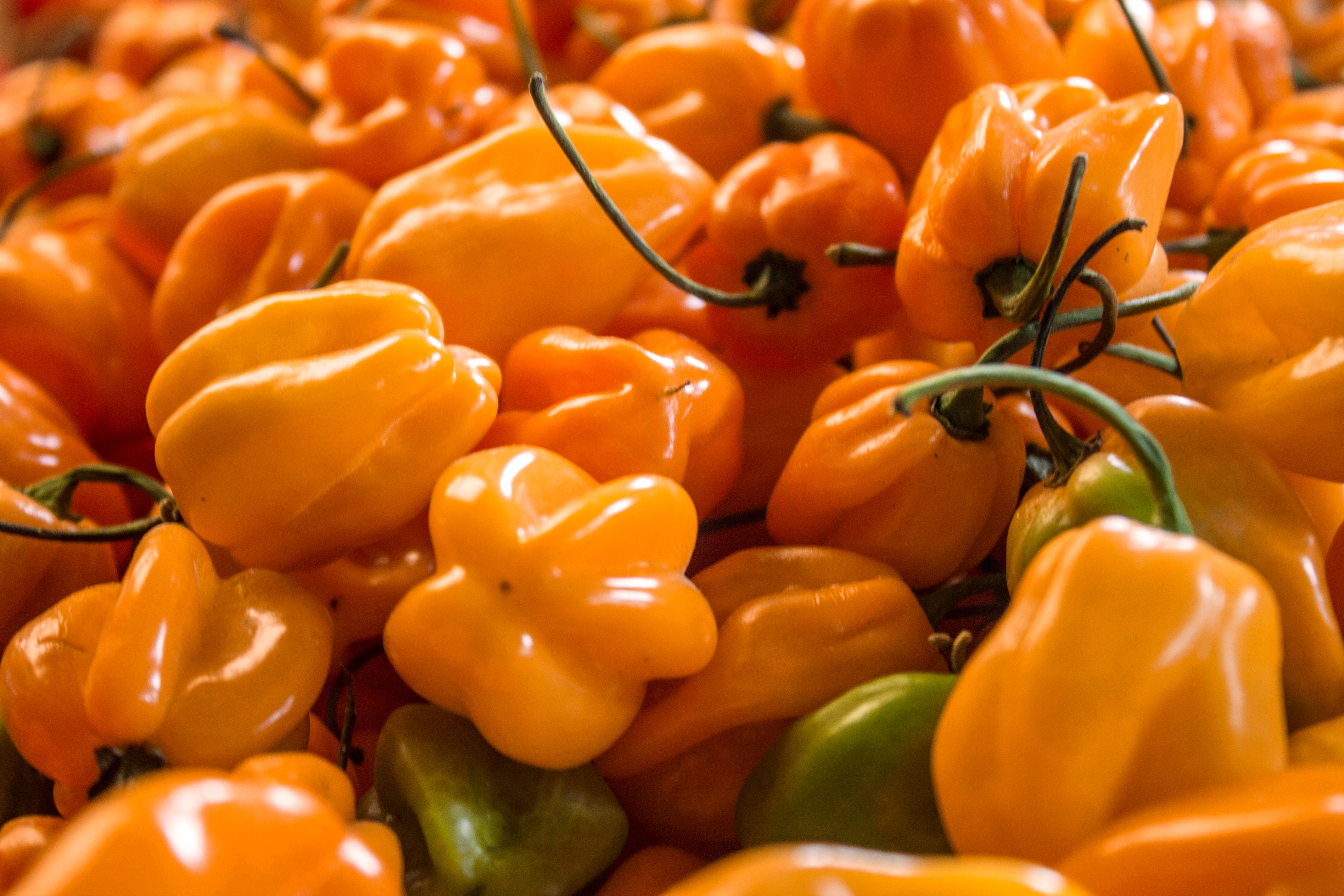
The Scotch Bonnet pepper closely resembles the Habanero pepper and the Jamaican pepper. Pale yellow, orange, or red, the Scotch Bonnet is smaller than a Habanero. It is a very hot pepper with a fruity, smoky flavor. Scotch Bonnet is one of the essential ingredients in Jamaican cooking, particularly in jerk sauces and Caribbean curries.
Scotch Bonnet pepper: a fruity, fiery Caribbean chili
The Scotch Bonnet pepper is one of the Caribbean’s signature chili peppers. Recognizable by its flattened, slightly bumpy shape, which can resemble a small Scottish bonnet, it is especially prized for its fruity aroma, intense heat, and essential place in Caribbean cooking.
Closely related to the Habanero pepper, the Scotch Bonnet belongs to the species Capsicum chinense. Behind its heat lies a wealth of flavor: fruity, slightly sweet, exotic notes that make it ideal for spicing up sauces, marinades, meats, fish, and Creole dishes.
How hot is a Scotch Bonnet pepper?
The Scotch Bonnet generally measures between 100,000 and 350,000 Scoville Heat Units (SHU), depending on the variety, growing conditions, and ripeness of the pepper.
It is therefore among the very hot peppers. It is considerably hotter than a jalapeño and comparable to many Habanero peppers. Despite its heat, the Scotch Bonnet is prized for its flavor, not just its spiciness.
What does a Scotch Bonnet taste like?
The Scotch Bonnet has a distinctive flavor profile. Its intense heat comes with fruity, tropical, and slightly sweet notes. This combination of heat and aroma explains its popularity in Caribbean cuisines.
Depending on the variety and ripeness, its color can change from green to yellow, orange, or red. As the pepper ripens, its aromas may become more pronounced and fruity.
Origins of the Scotch Bonnet pepper
The Scotch Bonnet is traditionally associated with the Caribbean, where it plays an important role in local cooking. It features in many Jamaican, Haitian, and other Caribbean recipes.
In Jamaica, it is used in the famous jerk chicken, an iconic dish of marinated, heavily seasoned chicken. Scotch Bonnet gives the dish substantial heat as well as the fruity aromas characteristic of Capsicum chinense peppers.
How do you use Scotch Bonnet peppers in cooking?
Scotch Bonnet can be used fresh, dried, puréed, or added to a hot sauce. Because it is very hot, start with a small amount and gradually adjust it to your heat tolerance.
It pairs especially well with:
- chicken and pork marinades;
- fish and seafood;
- Creole and Caribbean sauces;
- curries and stews;
- salsas and fruit-based dishes;
- homemade hot sauces;
- rice and bean dishes;
- Jamaican recipes such as jerk chicken.
To make the most of its flavor, Scotch Bonnet can also be paired with ingredients that add a touch of freshness or sweetness, such as mango, pineapple, lime, or coconut milk.
Scotch Bonnet in Caribbean cooking
The Scotch Bonnet pepper is an essential ingredient in many Caribbean cuisines. Its powerful aroma pairs naturally with spices, herbs, fish, shellfish, and meat.
In the Caribbean, Scotch Bonnet-type peppers are especially valued in hot sauces and Creole dishes. They add unmistakable heat while retaining plenty of flavor.
Scotch Bonnet vs. Habanero: what’s the difference?
The Scotch Bonnet and Habanero are closely related peppers: both belong to the species Capsicum chinense. Depending on the variety, they can have comparable heat levels, but their shapes and flavor profiles can differ.
The Scotch Bonnet is strongly associated with Caribbean cuisines and generally has a pronounced fruity, exotic aroma. The Habanero, meanwhile, is widely used in cuisines around the world and comes in many varieties and colors.
Recipe idea: Scotch Bonnet, mango, and lime sauce
For a fresh-tasting homemade hot sauce, combine a Scotch Bonnet pepper with mango, lime juice, a little vinegar, garlic, and a pinch of salt.
Blend the ingredients until the sauce is smooth, then adjust the acidity and heat to taste. This fruity sauce pairs especially well with grilled chicken, shrimp, tacos, fish, or marinated meats.
How do you store Scotch Bonnet peppers?
Fresh Scotch Bonnet peppers can be kept in the refrigerator for a few days. To extend their shelf life, they can also be dried, frozen, or made into a purée or sauce.
If you handle fresh Scotch Bonnet peppers, which are particularly hot, avoid touching your eyes and wash your hands thoroughly afterward. Wearing gloves can be helpful when handling large quantities.
A pepper for those who love intense heat
With its intense heat and fruity aroma, the Scotch Bonnet appeals to chili lovers who want flavor as well as heat. It’s an excellent choice for making homemade hot sauce, spicing up a marinade, or giving your recipes a distinctly Caribbean character.
Discover the Scotch Bonnet pepper and enjoy its balance of heat, fruity aroma, and exotic character.
[carrousel products="1962,38,499,2872,1388" title="Scotch Bonnet pepper " subtitle="products with "]
[/col]
[/row]