


- To not miss anything and get all the information to succeed in your pepper planting, check out our Ultimate Pepper Growing Guide
It's perfect for making your homemade pickles of course, but also in salads, soups, in your raclettes (yes, once again the combination of pepper and cheese is delicious!), you can also make pepper fritters, as appetizers during your aperitifs, and anything else that pleases you!
Get your fill of vitamins with this adorable original pepper!
- heat: 1,000 on the Scoville scale.
- plant size approximately 70 cm.
- medium-sized fruit, approximately 1.5cm long.
- fruit color: Green during growth, Red at maturity.
- genus: Capsicum Chinense.
- ideal germination: between January and April.
- harvest: between September and November.
What Equipment for Growing My Peppers?
To optimize your results, we recommend equipping yourself with:
Red Biquinho Pepper Seeds.
An enclosed growing space such as a mini greenhouse.
Coconut pellets, peat, or cotton (to germinate the seeds).
Labels (to avoid mixing up your seedlings).
Potting soil (ideally a mixture of 50% black peat and 50% blonde peat) or special flowering soil which will also work.
Fertilizer for Peppers or Tomatoes, or 5-5-10 fertilizer for those in the know.
A water sprayer or watering can.
Gloves (if you don't like contact with soil).
Pots with a diameter of 7 or 8 cm at first before using 10-liter pots or larger depending on the pepper for repotting
To make your life easier, we offer our mini greenhouse for growing your peppers.
How to Germinate My Pepper Seeds?
Growing peppers is a process that requires patience and some knowledge, but don't panic, we'll explain everything you need to germinate your pepper seeds!
Pepper seedlings are sown at the beginning of the year, generally between January at the earliest and March for the beginning of spring. To do this, you will need the equipment listed above.
You then have 2 options:
Plant your seed directly in a pot full of potting soil at half a centimeter depth
Place a seed on a coconut pellet or on a piece of cotton.
In both cases, once the seed is in place, you will need to spray enough water to moisten the soil or cotton without soaking it, then place your coconut pellet or cotton in a container like a mini greenhouse which will retain the heat and humidity, thus providing oxygen. If you use a flower pot, you can simply stretch film over it and make small holes with a toothpick to oxygenate the plant.
The ideal is to maintain a constant temperature of 28 degrees. You can store your container behind a sunny window, on or near a radiator, or on a heating mat or heating pad designed for this purpose.
OUR TIP:
Place your mini greenhouse on your internet router!
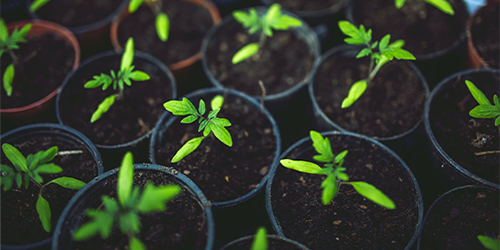
Remember to air out your growing area from time to time to prevent the appearance of fungi while keeping the soil moist. Once the first leaves appear, you will need to make sure to give your seedlings enough sun for 12 to 14 hours per day. Once the second set of leaves is well developed, you can then repot them.
Once potted, keep your plant near a heat source and exposed to the sun (ideally try to filter the light to avoid heat stress)
After the Ice Saints around mid-May, you can move your plant outdoors and plant your pepper in the ground if you wish, or leave it in a pot and place it on a balcony, a window sill, or even along a wall, preferably on the south side.
How to Water My Red Biquinho Pepper?
When watering your Red Biquinho pepper, be careful not to overwater. Too much water can drown the plant and lead to its demise. You simply need to let the soil dry between each watering to avoid insect proliferation and drowning the plant.
Once the plant is well developed (once your plant reaches about thirty centimeters), you can cause water stress by stopping watering the plant for several days before resuming watering (be careful not to abuse this technique though, it would be a shame to let your pepper plant die).
How to Properly Prepare My Harvest?
Once your pepper plant is in place, here are our tips to optimize your future harvest:
When your pepper plant reaches a height of 15 to 20 cm, you can pinch the top of the stem (without breaking it) which should allow the plant to grow bushier and produce a little more.
If flowering is early for one of your plants, remove the first flowers to prevent them from demanding too much energy from the plant.
If your pepper plant is outdoors, insects will take care of pollinating the plant which will then produce peppers. If your plant is indoors, you will need to do this manually: take your clean finger and rub it lightly against each flower from one to another.
Don't hesitate to use a bamboo stake or rod to support your plant.
When to Harvest My Red Biquinho Pepper?
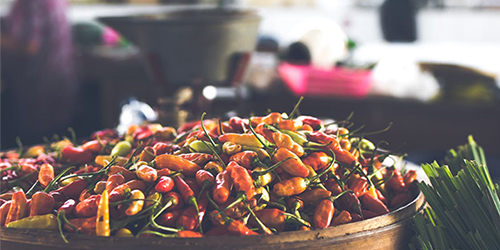
For harvesting your Red Biquinho pepper, as with others, you will need to look at its color! This pepper is harvested once it turns Red.
Characteristics
| Capacity | 10 seeds |
|---|---|
| Scoville scale | 1,005 (estimated) |
| What intensity? | 1 |
Customer reviews

Planté il y a quelques jours et très impatient de voir le résultat !
V. Olivier publié le 10/03/2025
nickel !
D. René publié le 07/01/2025

Les plants ont du mal à démarrer, seule 1 graine sur 2 a poussé (sur 10 petites graines ????) j espère que mes plants vont produire...
A. Anonymous publié le 05/04/2022
Twjgwkyxkylf
A. Anonymous publié le 23/03/2022
Pas encore germées !
A. Anonymous publié le 01/05/2021
€3.00
Biquinho peppers originate from Brazil. Biquinho means "little beak" due to its shape.
It's a mild pepper, it can be consumed raw or cooked and it's mainly used to be pickled in vinegar.

Flawless delivery and reception
Discover the benefits of bulk buying


