


- To not miss anything and get all the information to succeed in your pepper planting can be found in our Ultimate Pepper Growing Guide
Description of the Pepper and Its Plant:
Espelette pepper or Gorria pepper is a relatively mild pepper that measures approximately 4,000 units on the Scoville scale. It grows in a conical shape and measures between 7 and 14cm, to the touch the pepper has a smooth and soft texture. Regarding the visual aspect, once ripe it will adopt a bright red color shining in the sun.
The Espelette pepper plant grows up to one meter in height and about 60cm in width when well maintained, in terms of production it can provide between 500g and 1kg of fresh peppers, which is between 15 and 30 peppers maximum.
What Equipment for Growing My Peppers?
To optimize your results we advise you to equip yourself with:
Espelette Pepper seeds.
An enclosed growing area like a mini greenhouse.
Coco pellets, peat or cotton (to germinate the seeds).
Labels (to not mix up your seedlings).
Potting soil (ideally a mixture of 50% black peat and 50% blonde peat) or flowering potting soil which will also do the job.
Fertilizer for Pepper or for tomatoes, or 5 5 10 fertilizer for connoisseurs.
A water sprayer or watering can.
Gloves (if you don't like the contact of soil).
Pots with a diameter of 7 or 8 cm at the beginning before using 10 liter pots or more depending on the pepper for repotting
To make your life easier we offer you our mini greenhouse for growing your peppers.
When to Plant My Espelette Pepper?
Espelette Pepper is planted between February and April, slightly later than some other peppers.
How to Germinate My Pepper Seeds?
Growing Peppers is a process that requires patience and some knowledge, but don't panic, we'll explain everything you need to know to germinate your pepper seeds!
Pepper sowing is done at the beginning of the year generally between January at the earliest and March for the beginning of spring, to do this you will need the equipment listed above.
You then have 2 options:
Plant directly in a pot full of potting soil your seed at half a cm depth
Place a seed on a coco pellet or on a piece of cotton.
In both cases, once the seed is in place you will need to spray enough water to moisten the soil or cotton without wetting it, then place your coco pellet or cotton in a container like a mini greenhouse which will then keep the heat and humidity thus providing oxygen, if you use a flower pot you can simply stretch plastic wrap over it and make small holes with a toothpick to oxygenate the plant.
The ideal is to maintain a constant temperature of 28 degrees, you can store your container behind a sunny window, on or near a radiator or on a heating mat designed for this purpose.
OUR TIP:
Place your mini greenhouse on your internet box!
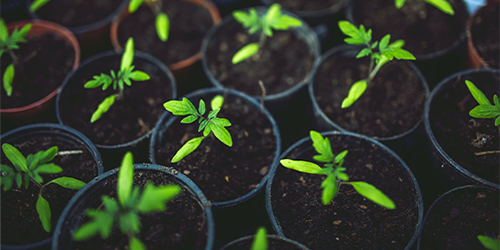
Remember to air out your growing area from time to time to avoid the appearance of fungi while keeping the soil moist, once the first leaves appear you will need to be careful to give your shoots enough sunlight for 12 to 14 hours per day, once the second set of leaves is well developed you can then repot them.
Once in a pot keep your plant near a heat source and exposed to the sun (ideally try to filter the light to avoid heat stress)
After the Ice Saints around mid-May you can move your plant outside and plant your pepper in the ground if you wish or leave it in a pot and display it on a balcony, a window sill or even along a wall, on the south side preferably.
How to Water My Espelette Pepper?
For watering your Espelette Pepper be careful of over-watering, too much water can drown the plant and lead to its demise, you will simply need to let the soil dry between each watering to avoid insect proliferation and drowning of the plant.
Once the plant is well developed (once your plant reaches about thirty centimeters) you can cause water stress by stopping watering the plant for several days before resuming watering (be careful however not to abuse this technique, it would be a shame to let your pepper plant die).
How to Properly Prepare My Harvest?
Once your pepper plant is in place, here are our tips to optimize your future harvest:
When your pepper plant reaches the size of 15 to 20 cm you can pinch the top of the stem (without breaking it) which should allow the plant to grow bushier and produce a little more.
If flowering is early for one of your plants, remove the first flowers to prevent them from demanding too much energy from the plant.
If your pepper plant is outdoors, insects will take care of pollinating the plant which will then produce peppers, if your plant is indoors, you will need to do this manually, take your clean finger and rub it lightly against each of the flowers from one to the other.
Don't hesitate to use a bamboo stake or a rod to support your plant.
When to Harvest My Espelette Pepper?
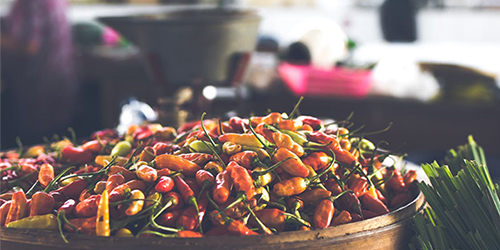
For harvesting your Espelette pepper, as with others you will need to look at its color! This pepper is harvested once red and is harvested from the month of July until the first frosts of the year.
Espelette Pepper on the Scoville Scale:
On the Scoville scale Espelette Pepper is not very hot and is suitable for all ages which facilitates its use in cooking. It is rated at approximately 4000 Scoville units on the scale of our dear friend Wilbur Scoville, to allow you to compare, Tabasco is rated at 8000 on this same scale. It's not very hot agreed but enough to spice up your dishes nonetheless, the real interest of Espelette pepper is in fact the aromas, because it has a very particular taste incomparable to other types of pepper that will make you travel to the sun from home!
How to Use Espelette Pepper in Cooking?
In cooking, Espelette Pepper is used absolutely everywhere and that's its big advantage! In sauces, with your meats, in your preparations, for barbecue, even in some desserts because the pepper-chocolate combination works wonderfully! Widely used in Basque cuisine because faithful to its origins, it is found at the table of the greatest restaurants because it is the only French spice to be certified AOC (controlled designation of origin).
More generally, Espelette pepper is widely used once dried and reduced to powder because it is easily preserved and used in this form, you have probably already seen it in some grocery stores or in some shops.
The History of Espelette Pepper:
The history of Espelette pepper is a story of travel and traditions, contrary to what one might think Espelette pepper is not originally from the town of Espelette, nor even from the Basque Country! This pepper is actually originally from Mexico, it was Juan Sebastián Elcano a Basque navigator who in the 16th century brought back this pepper from one of his expeditions and introduced it to the Basque Country, first used as a pepper substitute for aromatic and preservative purposes for food, it was only in 1650 that the farmers of Espelette began to cultivate this pepper who selected over generations the seeds of the most beautiful peppers and named the variety resulting from this evolution "Gorria", still cultivated since, Espelette pepper and the Espelette pepper string have become the emblems of the town.
Subsequently, Espelette pepper became in 1997 and remains to this day the only spice with a protected designation of origin, you can grow it at home however as these regulations are very strict it will not be considered as PDO but it can be just as good or even better if you cherish your pepper plant.
Due to its history, Espelette Pepper takes an important part in Basque culture, as can be seen through the Pepper Festival organized by the pepper brotherhood which takes place in Espelette every year, but occupies an even more important place if not more in Basque cuisine.
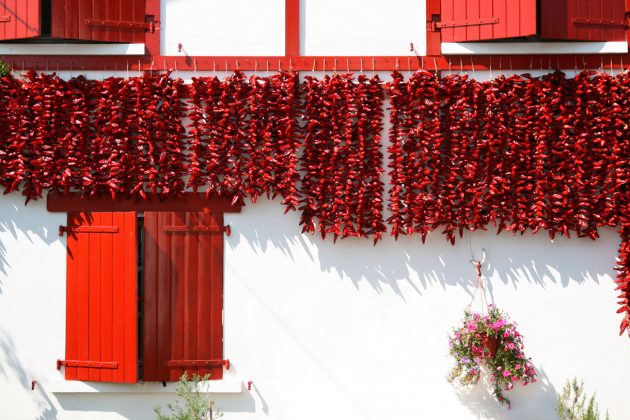
Traditionally, Espelette Pepper is hung on a string then dried from the facades of houses, it is sometimes resold in this form and leaves a lasting impression because when it is dried in this way it brings a particular charm to the houses displaying these clusters of pepper.
Characteristics
| Capacity | 10 seeds |
|---|---|
| Scoville scale | 4000 (estimated) |
| Storage | Keep cool |
| What intensity? | 1.5 |
Customer reviews

100% de taux de germination (pastille coco sous mini serre). Vivement la récolte dans quelques mois !
A. Anonymous publié le 14/04/2022

TrèsB
A. Anonymous publié le 11/03/2022
8 graines levées
A. Anonymous publié le 23/02/2022
Les 10 graines commandées sont toutes là, dans un petit sachet étiqueté. A priori ça commence à germer !
A. Anonymous publié le 16/04/2021
Pour le prix payé, il y aurait pu y avoir qq graines de plus : seulement 10 graines....
A. Anonymous publié le 31/03/2021
€4.20
The typical pepper of the Basque country!

Flawless delivery and reception
Discover the benefits of bulk buying


